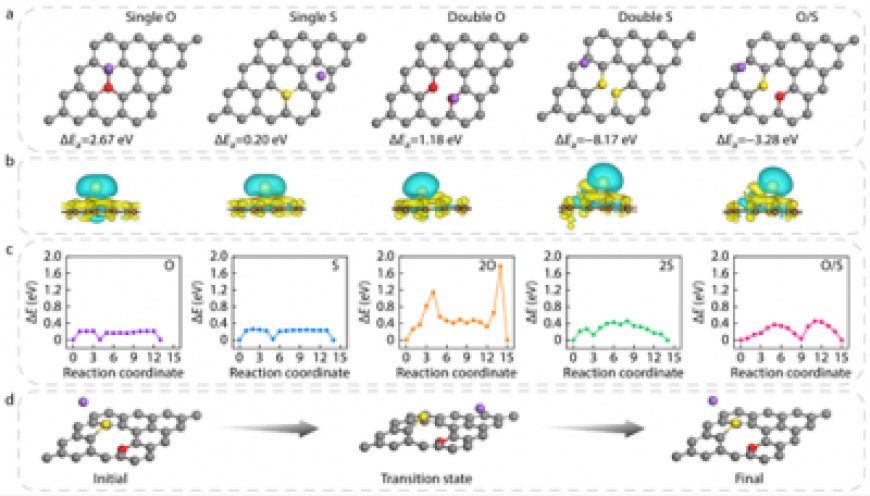
Sodium-ion batteries are emerging as a promising alternative to lithium-based systems, but their performance has long been limited by unstable anode materials and poor initial efficiency. A recent study addresses this challenge by redesigning hard carbon at the molecular level, enabling precise control over its internal pore structure and sodium storage behavior. By combining intramolecular doping engineering with a targeted presodiation strategy, the research achieves both high reversible capacity and exceptional long-term stability. The approach not only improves sodium-ion adsorption and transport but also suppresses irreversible sodium loss during early cycling, offering a practical pathway toward durable, high-efficiency sodium-ion batteries.









 Like
0
Like
0
 Dislike
0
Dislike
0
 Love
0
Love
0
 Funny
0
Funny
0
 Angry
0
Angry
0
 Sad
0
Sad
0
 Wow
0
Wow
0